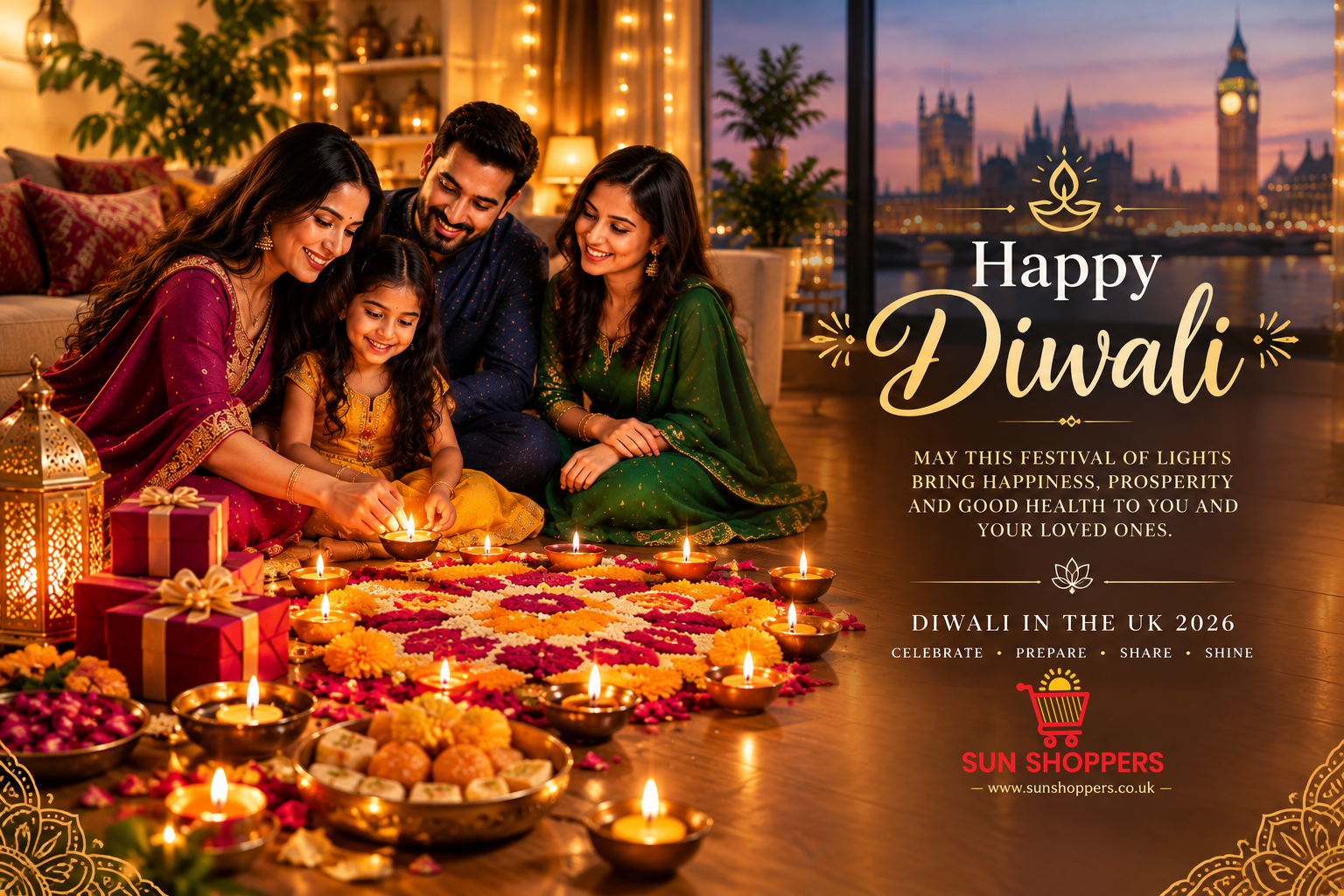
Diwali is just around the corner, and whether you’ve celebrated it every year of your life or you’re simply looking for the perfect way to mark the occasion this year, there’s a lot to get organised before the lights go up and the sweets come out. Diwali 2026 falls on Sunday 8 November, and while that’s the main day of celebration, Diwali is traditionally observed over five days. That means the preparation, shopping and excitement often begin weeks beforehand.
In this guide, we’re covering everything you need to know about Diwali 2026 in the UK: what the festival celebrates, how it’s marked across Britain, a complete essentials checklist so nothing gets forgotten, and a gift guide to help you choose the perfect present for everyone on your list.
What Is Diwali?
Diwali, also known as Deepavali, is widely known as the “Festival of Lights.” For the many communities who celebrate it, the festival is associated with themes of light overcoming darkness, good overcoming evil, renewal and hope. While the stories and traditions behind Diwali vary across regions and communities, these themes remain central to many celebrations.
For many Hindus, Diwali is associated with Lord Rama’s return to Ayodhya after 14 years in exile and his victory over the demon king Ravana. According to the tradition, people welcomed Rama, Sita and Lakshmana home by lighting rows of diyas (oil lamps).
In other Hindu traditions, Diwali is associated with Lord Krishna’s victory over the demon Narakasura, while many families mark the occasion by worshipping Goddess Lakshmi, the goddess associated with wealth and prosperity.
Diwali also holds important significance for other religious communities. Sikhs observe Bandi Chhor Divas, commemorating Guru Hargobind Ji’s release from imprisonment and his return to Amritsar. Jains observe Diwali as the anniversary of Lord Mahavira’s attainment of moksha, or spiritual liberation.
Although the traditions and stories differ, Diwali is a time when homes are illuminated, families come together and people look towards new beginnings.
The Five Days of Diwali
Diwali is traditionally associated with a five-day period, although the names, customs and ways of celebrating can vary between regions and communities.
Day
Name
What It Celebrates
Day 1
Dhanteras
Associated with prosperity and well-being; many people traditionally purchase new items, including gold, silver or jewellery.
Day 2
Naraka Chaturdashi (Choti Diwali)
Associated with the triumph of good over evil. Homes may be cleaned and decorated, with diyas and rangoli adding to the festive atmosphere.
Day 3
Lakshmi Puja (Main Diwali)
The main day for many Hindu communities, marked by prayers, diyas, sweets, fireworks and gatherings with family and friends.
Day 4
Govardhan Puja
Observed in many Hindu communities and associated with Lord Krishna and the Govardhan Hill story. Celebrations often include prayers and festive food.
Day 5
Bhai Dooj
Celebrates the special bond between brothers and sisters, with families coming together and exchanging blessings and gifts.
For the many Hindu, Sikh and Jain communities across the UK, this festive period is an opportunity to connect with family, continue cherished traditions and create new memories. Whether celebrated with a large gathering or a quiet evening at home, Diwali brings a sense of warmth, togetherness and new beginnings.
How to Celebrate Diwali in the UK
Diwali celebrations across the UK bring together traditional customs, community events and modern ways of celebrating. From large-scale public celebrations to quiet family evenings at home, there are plenty of ways to enjoy the Festival of Lights.
Diwali Events Across the UK
Diwali is celebrated across Britain, with large public events taking place in cities and communities around the country.
Leicester is particularly well known for its spectacular Diwali celebrations, centred around Belgrave Road, often known as the “Golden Mile.” The celebrations typically include a major light switch-on, entertainment and a spectacular fireworks display, attracting visitors from across the region.
In London, Trafalgar Square hosts a major annual Diwali celebration, bringing the festival to the heart of the capital. The event traditionally features Indian music and dance performances, food, stalls, rangoli and family-friendly activities.
Beyond Leicester and London, cities including Birmingham, Manchester and Bristol also have active South Asian communities and host Diwali celebrations, cultural events and temple programmes. Event dates and activities can change from year to year, so it’s worth checking your local council, community organisations or nearby temples for events in your area.
Celebrating Diwali at Home
For many families, some of the most meaningful Diwali traditions take place at home.
A thorough clean is traditionally carried out in the days leading up to Diwali, helping families prepare their homes for the celebrations and, in many traditions, welcoming prosperity and good fortune.
Homes are then decorated with diyas (small oil lamps), candles and string lights, often placed around windows, doorways and other areas of the home. The light represents the victory of light over darkness and adds a warm, festive atmosphere to the celebrations.
Another much-loved tradition is rangoli, colourful decorative patterns created using coloured powder, rice, flower petals or other materials. Rangoli are often placed near entrances to welcome guests and, in some Hindu traditions, to welcome Goddess Lakshmi.
Even in smaller UK homes and flats, these traditions can be adapted beautifully. A few diyas on a windowsill, some fairy lights around the home and a small rangoli by the front door can instantly bring the Diwali spirit indoors.
Food & Sweets Traditions
Food is at the heart of many Diwali celebrations. Families prepare and share a variety of sweets and savoury snacks, offering them to relatives, friends, neighbours and guests throughout the festive period.
For many families, Diwali is also a time for making traditional recipes at home, preparing special meals and putting together boxes of sweets and savouries to give as gifts.
Those preparing Diwali food in the UK often start shopping well in advance, particularly when they are planning family gatherings or preparing gifts for friends and neighbours. Making a shopping list early can help ensure you have all the ingredients, sweets and snacks you need before the celebrations begin. For ready-made festive treats, take a look at our guide to Diwali sweets and snacks from Madras Flavours.
New Clothes & Jewellery
New clothes and jewellery have long been associated with Diwali celebrations. Dhanteras, in particular, is traditionally considered an auspicious occasion for purchasing precious metals and other new items in many Hindu communities.
For Lakshmi Puja and family gatherings, many people choose to dress in their best festive or traditional outfits, with jewellery adding the finishing touch to a Diwali look.
From traditional gold-inspired pieces and temple jewellery to contemporary necklaces, earrings and bangles, jewellery can also make a thoughtful Diwali gift for someone special.
Diwali Essentials Checklist
Getting ready for Diwali involves more than just picking a date to celebrate, there’s plenty to organise beforehand. From decorating your home and preparing for puja to stocking up on festive food and choosing gifts, a little planning can make the celebrations much more enjoyable.
Use this checklist to make sure nothing gets forgotten this year.
🪔 Diyas & Lights
Traditional clay or brass diyas
Oil or ghee and cotton wicks, if you’re using traditional diyas
String or fairy lights for windows, doorways and outdoor spaces
Candles for your home and celebrations
Extra batteries or a spare LED light set as a backup
🌸 Rangoli Supplies
Rangoli colour powders or ready-made stencils
Flower petals: marigolds are a popular choice
Rice or other materials for creating traditional designs
A rangoli-making tool or roller if you’re short on time
🙏 Puja Essentials
Depending on your family’s traditions, you may want to prepare:
A puja thali
Incense sticks (agarbatti)
Diyas and cotton wicks
Kumkum and other traditional items
Camphor
Flowers and offerings
Images or idols of the deities traditionally worshipped by your family
🍬 Festive Food & Cooking Ingredients
Spices and ingredients for traditional Diwali recipes
Ingredients for homemade sweets and savouries
Ready-mix blends for drinks and festive treats
Snacks such as murukku, mixture and other savouries
Mithai or sweet boxes for family, friends and guests
A few extra sweets and snacks for unexpected visitors (you’ll probably need more than you think!)
If you’re preparing food for a larger gathering, it’s worth making your shopping list early. Ordering some ingredients, ready mixes, sweets and savouries in advance can save you a last-minute trip to the shops.
👗 Festive Outfits & Jewellery
Your festive outfit, planned well in advance
Any tailoring or alterations needed
Jewellery to complement your outfit
Earrings, bangles or a statement necklace
Traditional or contemporary pieces for Lakshmi Puja and family gatherings
🎁 Gifts
Gifts for family and close friends
Sweet boxes or hampers for neighbours and colleagues
Small gifts for children
Host gifts if you’re visiting someone’s home
Jewellery or personal gifts for someone special
A few extra gifts for those unexpected Diwali invitations
Diwali Gift Guide
Gifting is one of the most meaningful parts of Diwali. Whether you’re buying for family, friends or colleagues, a thoughtful gift can make the celebration even more special. If you’re not sure where to start, here’s a simple Diwali gift guide to help you find something for everyone on your list.
🎁 Gifts for Family & Elders
For parents, grandparents and other elders, thoughtful and traditional gifts are often a wonderful choice.
Jewellery is a timeless option, particularly around Dhanteras, when buying gold, silver or other new items is considered auspicious in many Hindu traditions. From traditional South Indian-inspired pieces to elegant contemporary designs, jewellery can make a personal gift for mothers, aunts and grandmothers.
Food hampers are another lovely option. Combining sweets, savouries, speciality foods and wellness products creates a generous gift that the whole family can enjoy together.
For those who prefer something practical, consider a selection of traditional ingredients, drinks or ready-to-prepare festive treats that they can enjoy during Diwali and beyond.
🎀 Gifts for Friends
When you’re shopping for friends, you can have a little more fun with your choices.
Boxes of traditional sweets and savouries are easy to share and always suit the festive occasion. You could also put together a small selection of South Indian treats for a friend who enjoys discovering new flavours or cooking at home.
For health-conscious friends, wellness drinks and food products can make an interesting alternative to the usual box of sweets, particularly if you want to give something thoughtful and a little different.
Jewellery can also be a great choice for close friends. A pair of earrings, a delicate necklace or a statement piece can make a memorable gift without needing to know their exact clothing size.
🪔 Gifts for Hosts
If you’re attending a Diwali gathering, arriving with a small gift for your host is a lovely gesture.
You don’t need to go overboard. A box of sweets, a selection of festive savouries, a small food hamper, decorative diyas or another thoughtful festive item can make a perfect host gift.
The key is choosing something that can be enjoyed or shared, especially if you’re visiting a family gathering.
💷 Diwali Gift Ideas by Budget
Under £15
A small box of traditional sweets or savouries
Decorative diyas
A small food or wellness product
A pair of simple earrings
£15–£30
A festive selection of sweets and savouries
A small food or wellness hamper
Earrings, bangles or another jewellery piece
A selection of speciality Indian food products
£30+
A premium Diwali gift hamper
A statement necklace or jewellery set
A curated gift box combining food, wellness products and festive items
A larger selection of sweets and savouries for the whole family
Thoughtful Gifts Make the Difference
Diwali gifting doesn’t have to be expensive to be meaningful. A small box of sweets for a neighbour, a beautiful pair of earrings for a friend or a carefully put-together hamper for your parents can all carry the same message: you’re thinking of them and wishing them well.
Whether you’re looking for traditional sweets and savouries, wellness products, festive food or jewellery, choosing something that suits the person you’re gifting is what makes it special. And if you’re doing all your Diwali shopping in the UK, having food, festive treats, jewellery and gift ideas available in one place can make preparing for the celebrations that little bit easier.
Wishing You a Very Happy Diwali 🪔
Diwali is a time for light, warmth and togetherness, a chance to slow down, celebrate with the people you love and welcome new beginnings. Whether you’re hosting a big family gathering or keeping things simple with a few diyas and a home-cooked meal, we hope this guide has helped you feel ready for the festivities.
However you’re celebrating, we wish you and your family a very Happy Diwali, filled with light, laughter, love and prosperity. 🪔✨
Frequently Asked Questions About Diwali 2026
When is Diwali 2026 in the UK?
Diwali 2026 falls on Sunday 8 November.
How many days is Diwali?
Diwali is traditionally associated with a five-day period, although customs and dates can vary between communities and regions.
What are the five days of Diwali?
Dhanteras, Naraka Chaturdashi, Diwali/Lakshmi Puja, Govardhan Puja and Bhai Dooj.
How is Diwali celebrated in the UK?
People celebrate in different ways, including decorating homes, lighting diyas, preparing festive food, exchanging gifts, attending religious services and joining community events.
Where can I celebrate Diwali in the UK?
Large celebrations take place in places including Leicester and London, while many other cities and local communities host their own events.
What should I buy for Diwali?
Common essentials include diyas, lights, rangoli supplies, puja items, festive food, sweets, gifts, clothing and jewellery.