In today’s fast-paced kitchens, convenience tools are no longer a luxury—they’re a necessity. One product that has gained steady popularity is the manual vegetable cutter. But is it actually worth buying, or is it just another kitchen gadget that ends up unused?
If you cook regularly and want to save time without relying on electricity, a manual vegetable cutter can be a surprisingly practical investment. Before deciding, it’s important to understand how it works, who it’s best for, and where it truly adds value.
What Is a Manual Vegetable Cutter?
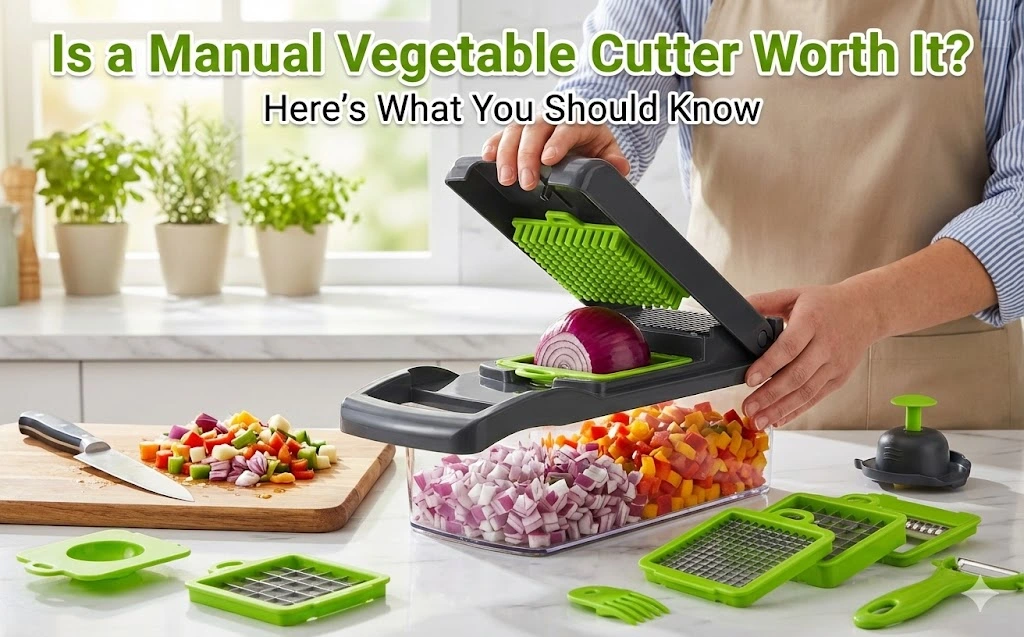
A manual vegetable cutter is a hand-operated kitchen tool designed to chop, dice, slice, or grate vegetables quickly. Unlike electric choppers, it doesn’t need power—just a simple push, pull, or twist mechanism.
Most models include interchangeable blades that allow you to:
- Chop onions, tomatoes, and vegetables evenly
- Slice fruits for salads
- Dice ingredients for curries and stir-fries
- Reduce prep time significantly
Its simplicity is what makes it appealing, especially for everyday home cooking.
Why Manual Vegetable Cutters Are Becoming Popular
The rising demand for manual vegetable cutters isn’t accidental. They solve real kitchen problems that many home cooks face.
1. Saves Time on Daily Cooking
Chopping vegetables is one of the most time-consuming parts of cooking. A manual cutter can reduce prep time by more than half, especially for repetitive tasks like onions, carrots, and potatoes.
2. No Electricity Required
Unlike electric choppers, manual cutters work anywhere—no plugs, no charging, no power cuts to worry about. This makes them ideal for small kitchens, rented homes, or even travel cooking.
3. More Control Over Cutting Size
Manual cutters give better control compared to food processors. You can decide how fine or coarse you want your vegetables, which is important for Indian cooking where texture matters.
4. Compact and Easy to Store
Most manual cutters are lightweight and compact, making them easy to store without occupying counter space.
Are Manual Vegetable Cutters Actually Effective?
This is where many buyers hesitate—and rightly so. The effectiveness of a manual vegetable cutter depends on design quality and blade sharpness.
A good cutter:
- Produces uniform cuts
- Handles soft and semi-hard vegetables easily
- Requires minimal force
- Doesn’t crush ingredients
For everyday vegetables like onions, tomatoes, capsicum, cucumber, cabbage, and boiled potatoes, a manual cutter performs exceptionally well. However, extremely hard vegetables (like raw beetroot) may require more effort or pre-cutting.
Manual vs Electric Vegetable Chopper: Which Is Better?
This comparison often comes up, but the answer depends on usage.
Manual Vegetable Cutter – Best For:
- Daily home cooking
- Small to medium quantities
- Easy cleaning
- Budget-friendly kitchens
- Noise-free operation
Electric Chopper – Best For:
- Large batch cooking
- Commercial or heavy use
- Very fine processing
For most households, especially those cooking Indian meals daily, a manual vegetable cutter offers better value for money and practicality.
Who Should Buy a Manual Vegetable Cutter?
A manual vegetable cutter is especially useful if you:
- Cook at home regularly
- Want to reduce prep time
- Prefer simple, low-maintenance tools
- Have limited kitchen space
- Don’t want the hassle of electric appliances
It’s also a great option for:
- Students
- Working professionals
- Elderly users who want safer cutting
- Anyone who dislikes chopping onions manually
Key Things to Look for Before Buying
Not all manual vegetable cutters are the same. To avoid disappointment, focus on these factors:
Blade Quality
Stainless steel blades stay sharper longer and deliver cleaner cuts.
Build Material
Food-grade plastic or stainless steel ensures durability and safety.
Ease of Cleaning
Choose a cutter that can be easily dismantled and washed.
Safety Features
Non-slip base and blade guards reduce the risk of injury.
Versatility
Models with multiple blades give more value and flexibility.
Common Concerns (and the Reality)
“Will it break easily?”
Cheap models might, but a well-built cutter lasts years with normal use.
“Is it hard to clean?”
Most manual cutters are easier to clean than electric choppers since there are no motors.
“Does it really save time?”
Yes—especially for repetitive chopping tasks.
Is a Manual Vegetable Cutter Worth the Money?
For most households, the answer is yes.
A manual vegetable cutter:
- Improves kitchen efficiency
- Reduces cooking fatigue
- Saves time daily
- Requires no electricity
- Offers excellent value at a low cost
It may not replace every kitchen tool, but for daily vegetable prep, it earns its place easily.
Final Verdict
If you’re looking for a simple, reliable way to speed up cooking without adding complexity to your kitchen, a manual vegetable cutter is absolutely worth it. It’s practical, affordable, and fits seamlessly into everyday cooking routines—especially for Indian kitchens where fresh vegetables are used daily.
The key is choosing a quality product and using it for the right purpose. When you do, it’s one of those tools you’ll wonder how you cooked without.