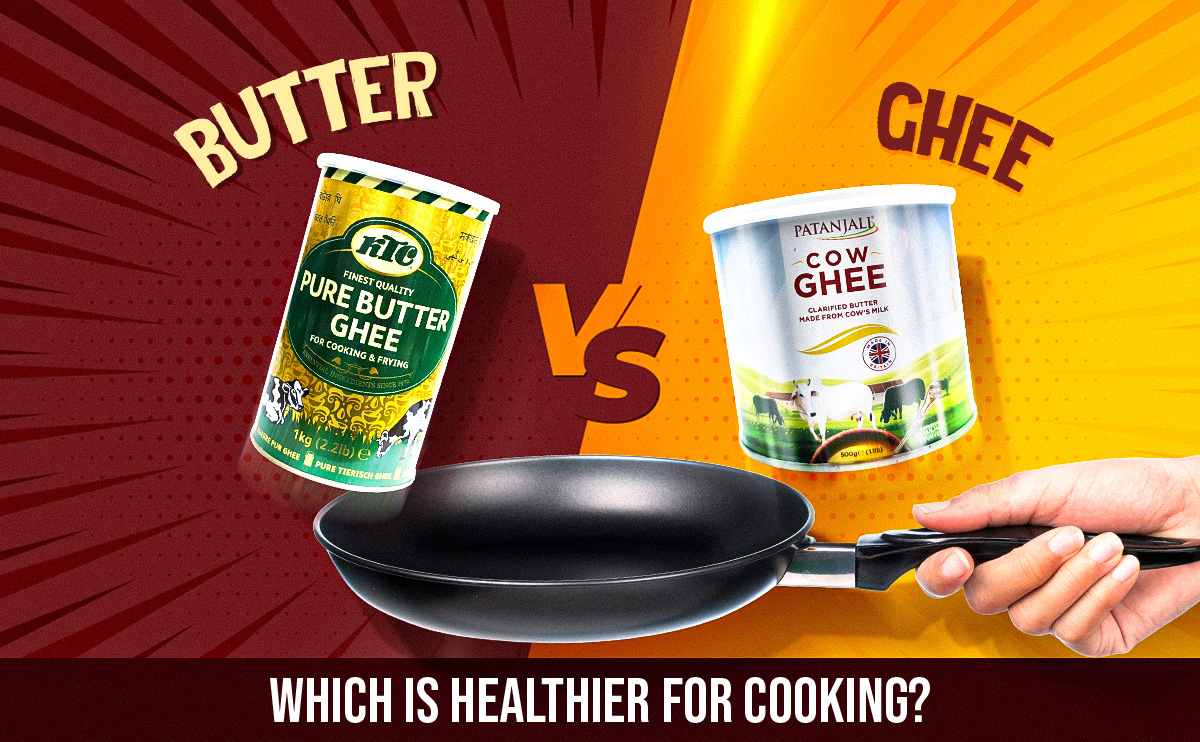
Choosing the right cooking fat isn’t a small decision—it directly affects your health, digestion, and even the nutritional value of your food. Ghee and butter both come from milk, but assuming they work the same way in cooking is a mistake. They behave very differently under heat, and that difference matters more than most people realize.
Let’s break this down logically, without hype or nostalgia.
5
What Exactly Is Ghee?
Ghee is clarified butter. During its preparation, butter is slowly heated until all water evaporates and milk solids (lactose and casein) separate and are removed. What remains is pure fat.
This process isn’t cosmetic—it fundamentally changes how the fat behaves in your kitchen and your body.
Key characteristics of ghee:
- Smoke point: ~250°C
- Shelf-stable (doesn’t need refrigeration)
- Free from lactose and casein
- Rich in fat-soluble vitamins (A, D, E, K)
- Contains butyric acid, a short-chain fatty acid linked to gut health
In simple terms, ghee is engineered—through traditional methods—to tolerate heat without breaking down.
What Is Butter, Really?
Butter is churned cream. It still contains:
- Water (about 15–20%)
- Milk solids (lactose and proteins)
- Fat
This composition is why butter tastes great—but also why it fails at high temperatures.
Butter basics:
- Smoke point: ~175°C
- Burns quickly during frying or sautéing
- Produces oxidized fats and harmful compounds when overheated
- Contains lactose and milk proteins (problematic for many adults)
Butter isn’t “bad,” but it’s fragile. Using it incorrectly is where people get into trouble.
Smoke Point: The Deal Breaker Most People Ignore
The smoke point is the temperature at which a fat starts breaking down and releasing smoke. Once this happens, the fat oxidizes and forms free radicals—compounds linked to inflammation and long-term health issues.
- Ghee: Handles frying, tadka, roasting, and sautéing effortlessly
- Butter: Burns, smokes, and degrades quickly under the same conditions
If you regularly cook Indian food, stir-fry vegetables, sear meats, or cook on medium-high heat, butter is simply the wrong tool.
Using butter for high-heat cooking is not “traditional” or “natural”—it’s inefficient and unhealthy.
Digestion and Gut Health: Another Clear Difference
Most adults are at least mildly lactose intolerant, even if they don’t realize it.
- Butter still contains lactose and casein, which can cause bloating, gas, and discomfort
- Ghee removes both during clarification, making it far easier to digest
Ghee also contains butyric acid, which supports the gut lining and may reduce inflammation. This is one reason ghee has long been used in traditional diets focused on digestion and metabolic health.
Nutritional Comparison (Without Marketing Spin)
Both ghee and butter are mostly fat—let’s be honest about that. The difference is quality and usability.
Ghee provides:
- Stable saturated fats that don’t oxidize easily
- Fat-soluble vitamins essential for hormone balance and immunity
- Better absorption of nutrients when cooking vegetables
Butter provides:
- Some vitamins
- Good flavor for baking and spreading
- Limited usefulness beyond low heat
Neither is a “weight loss food,” and anyone claiming that is lying. But if you’re choosing a fat to cook with daily, ghee is the smarter option.
When Butter Still Makes Sense
Butter isn’t useless—it’s just misused.
Use butter when:
- Baking cakes, cookies, or pastries
- Spreading on toast
- Cooking at low heat where it won’t burn
If you like butter’s flavor, you don’t need to eliminate it. Just stop pretending it’s suitable for frying or sautéing.
Which One Is Healthier for Cooking?
Let’s be blunt.
If your cooking involves heat—and most real cooking does—ghee is clearly healthier than butter.
- Higher smoke point = fewer toxins
- No lactose or casein = better digestion
- More stable fats = safer daily use
Butter belongs in baking and occasional low-heat use. Ghee belongs on your stove.
Final Verdict
If you cook regularly, especially at medium to high temperatures, ghee isn’t just the better option—it’s the correct one.
Butter tastes good, but taste alone doesn’t make something suitable for cooking. Long-term health is about choosing ingredients that work with your body, not against it.
For everyday cooking, digestion, and nutritional stability, ghee outperforms butter—no debate needed.